


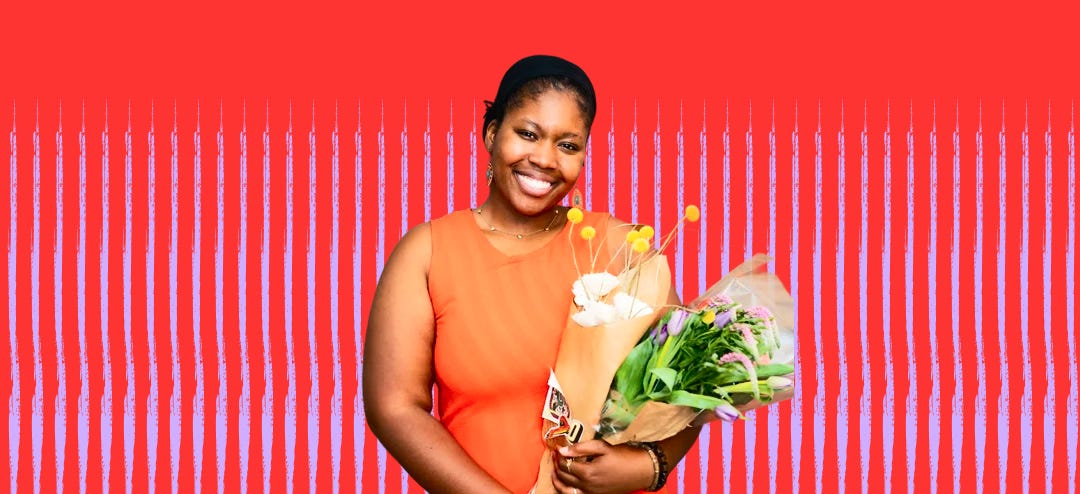
Photo of the Artist
Amir: You are very multidisciplinary, many hyphens. What drew you towards animation and film as a primary storytelling format?
Uzoma: I feel like I’ve always loved storytelling. As a child, I was in theater productions – storytelling through performance. I was in band and choir – storytelling through music. I wrote all the time. I used to make videos with my little sisters. The desire to tell stories has always been there. I wasn’t exposed to film or animation production until later.
When I was younger, I also refused to watch TV unless it was animated. Like, I was that strict. And so looking back, it makes perfect sense that I am on this path.
What was the switch from watching to doing?
What really got me to finally create my own stories was this class I took in my sophomore year of college – fundamentals of animation. I had made little looping animations before for fun, but that class was my first time using animation to tell a story.
The process of creating class projects really set me on the path of using animation as a tool for storytelling. I never called myself a filmmaker before that class. It took actually making something for me to realize that I didn’t just like animation as a consumer; I liked animation as the maker. From there, I just kept making.
That’s beautiful. I believe in the transformative power of a class.
In this class specifically, what do you think shifted? Were there any sentiments that stuck with you?
I don’t think I would have taken to the medium unless I was forced to make something and tell a story with animation. That was the biggest push for me. The professor just, like, forced us to make it. We had to make a final project. It was a class.
I used to share my art on social platforms a lot. And I remember when I shared the video from that class, but it ended up going viral. That was my first experience with internet virality.
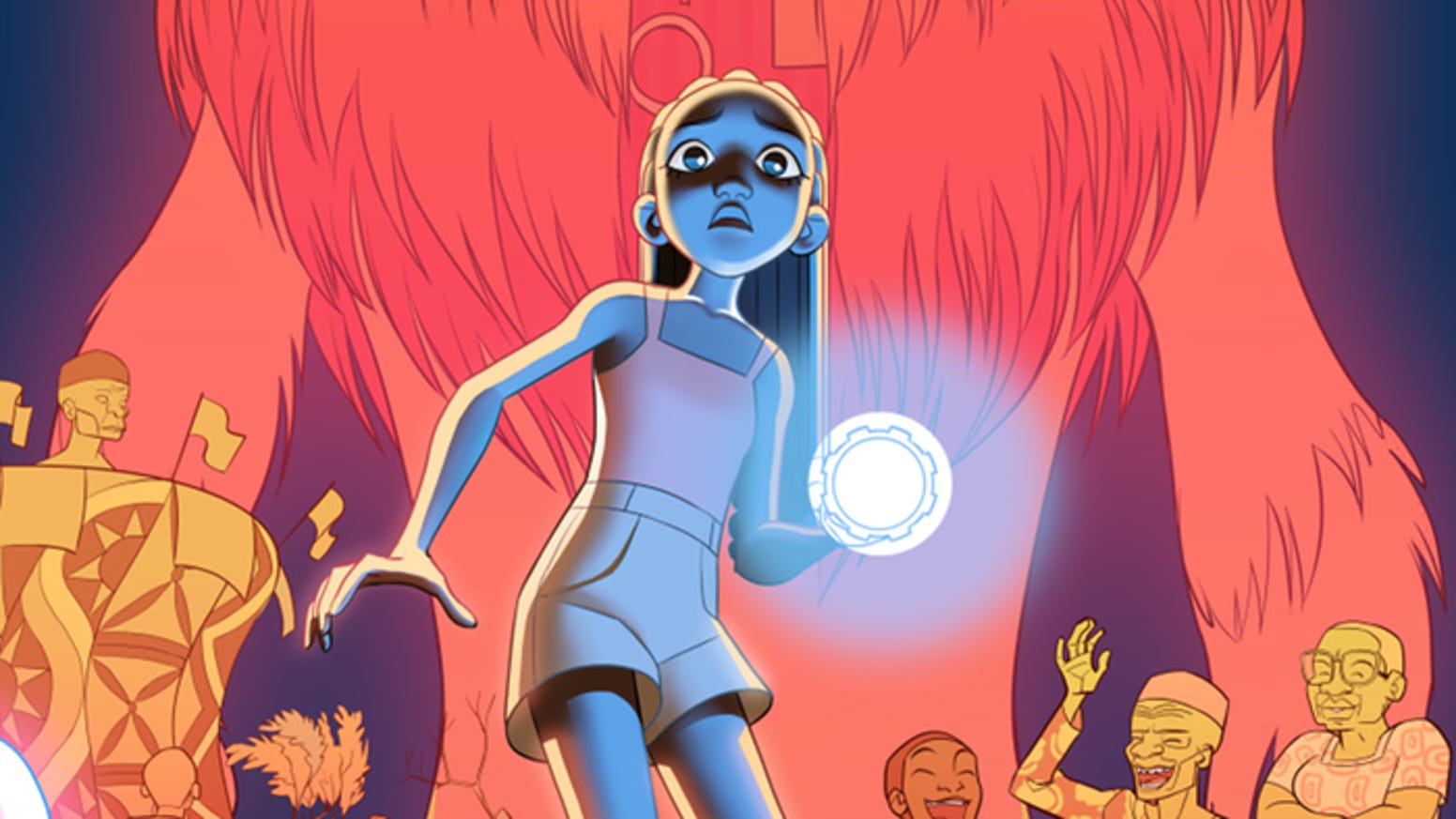
Cover art for Mmanwu, currently in production
I remember that video going viral!
The timing of it was interesting because I just declared my major in art, film, and visual studies. I remember being so nervous and apprehensive because I had no idea what a career in the arts looked like. But seeing the response to that short film made me feel really validated in the path that I was on.
I made it in three weeks; it was one minute, with no dialogue. I thought if this many people can resonate with something that I made quickly, imagine what I could do with more resources and more time.
That’s very interesting to hear because I feel people’s reactions to viral virality are very … diverse. How did this shape your relationship with the audience?
I definitely want my work to represent the communities I am a part of. I want people to be able to see their culture reflected in animation. I’m driven by the lack of mainstream representation within the medium.
I want to create work that is culturally specific but still universally relevant. Even if people don’t relate to the cultural aspects, I think being culturally specific creates circles of connection.
I remember when we were campaigning for the film, there were people of so many different ethnic groups who weren’t Nigerian, or even West African, saying this scene reminds me of their hometowns. A Chinese-American person was a huge advocate for the funding campaign online. They understood what it’s like to be in the diaspora, to feel your home country being both foreign and similar.
Do you aspire towards a wider audience or mass appeal?
I think it’s hard to reach both wide and to reach deep. And if I had to choose one or the other, I would rather reach deep. I think about movies that I’ve seen that are not good, but make a lot of money. Technically, they’re successful, but in my mind, it’s not an artistic success.
I feel we lose things when we have to appeal to everyone. There’s a lot of value in the specific. I want to make excellent work, and I want my audience to know that there was care and intention, that I didn’t cut corners, and for them to know things were researched and well thought out. I want them to feel the labor and love. I feel like in the age of AI, everything is all about being quick, fast, and cheap. I think it’s a shame, honestly.
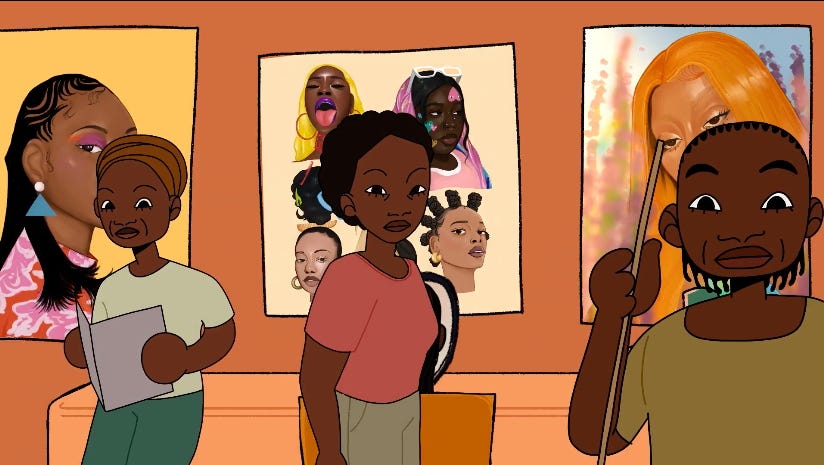
Adult Swim bumper illustration still
Can you talk some more about AI and the danger it poses to the Artistic process?
I’ve heard a lot of arguments for it from artists whom I actually respect and admire. But my mind just can’t be changed. I think creation should be hard. I think sometimes you need to toil away, thinking about an idea for days and weeks at a time.
If we lived in a society that really valued art, AI would be blasphemous. Things should take time. I think that things should be hard. Art should be hard. The process is just as important as the product. When we rob ourselves of creating a process that works for us, of finding systems and rituals that work for us, that use our brains, we are robbing ourselves of our abilities as artists.
There is so much value in things taking time. I love ideas finding me when they’re ready instead of me forcing them. I would much rather make something bad than have AI make something for me.
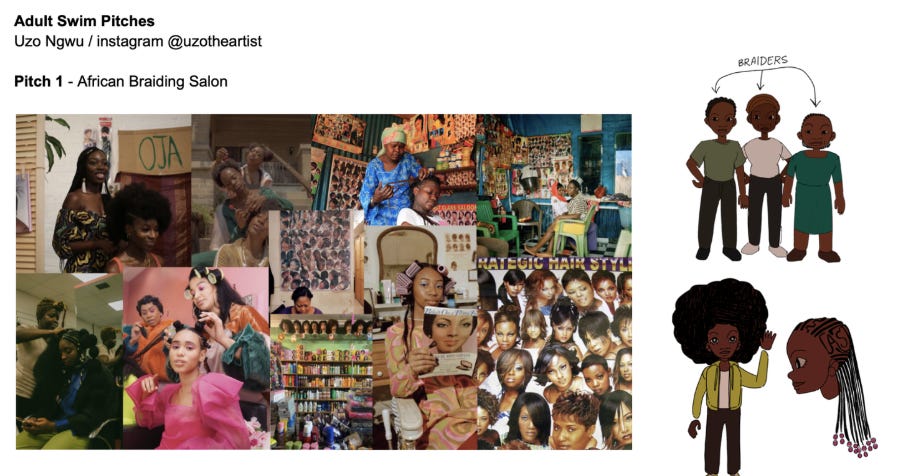
Process for Adult Swim bumper
Exactly.
I remember seeing your short movie trailer and also feeling that connection to the imagery. I specifically loved when the trailer switched from bright and sunny to dark and mysterious. West African storytelling loves to explore both the dark and the light. I’m wondering how you found balance between the dark and light, and why it is important to represent these polarities?
I grew up on animation, and I loved many films that actually have this balance between adult and child audience.
Can you name some?
I love Tangled, Princess and the Frog. Obviously. Mulan, Brother Bear, Hercules, Ratatouille. I love Tarzan.
My animation hot take is The Incredibles is one of, if not the best, animated films of all time. Kids can enjoy it. Adults can enjoy it. To me, that’s a perfect example of balancing the light and the dark in a way that still feels like it can reach audiences of all ages. Big studios don’t make movies like that anymore. I think everything is geared towards children now, which isn’t a bad thing. Kids deserve media that is just for them, but I do think that there is value in telling stories that balance the light and dark, because kids are smarter than we give them credit for. Not everything needs to be funny, easy, and handed to them. Those darker themes can just be really good for developing critical thinking.
To me, if someone were to leave a film that I made, and have no follow-up questions, I would be offended because I would hope to leave enough threads that people can continue conversations or form bold opinions. I think that’s just the power of specific and authentic storytelling.
How does authentic storytelling, as you define it, blend into your other titles as a writer, director, producer, illustrator, designer, and organizer? Did I miss something? I saw you singing on an IG Story recently? Singer? Did you make the typeface for ZOMA House?
I did!
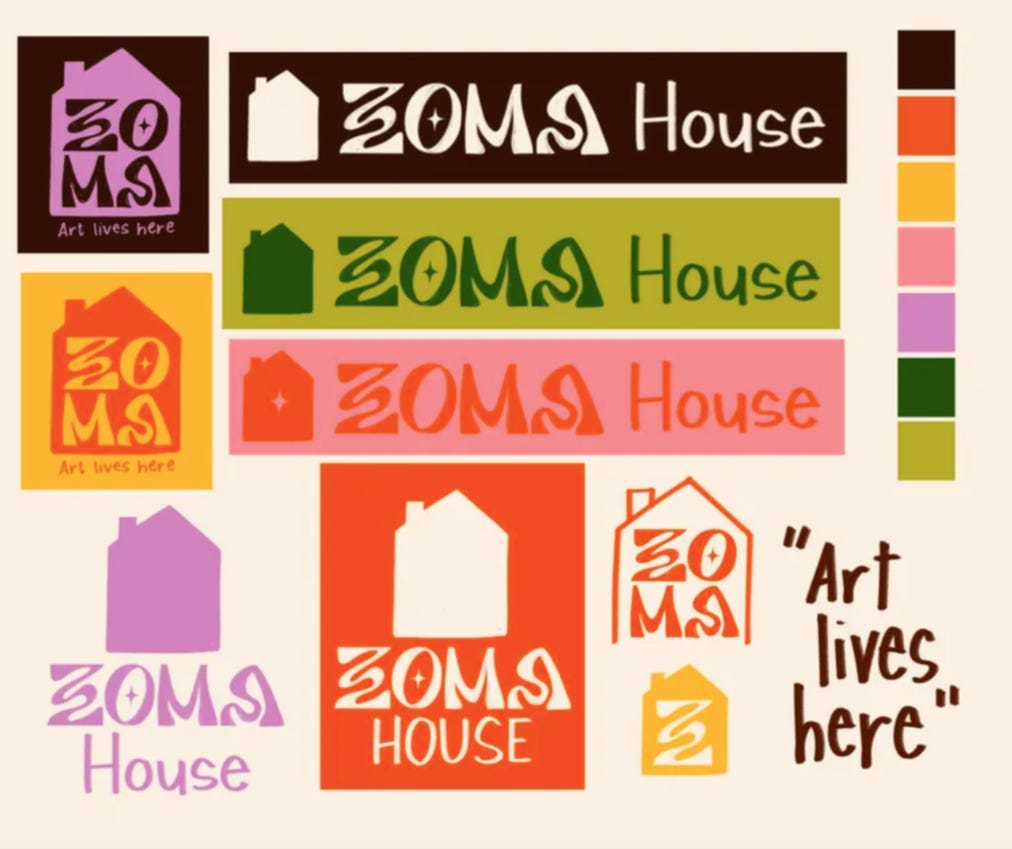
ZOMA House Brand Identity
You are actually insane. How do you find balance between your disciplines? How do they move and grow?
I think the connective thread between everything I do is cultural specificity. I actually redid my portfolio website recently, like maybe a month ago. I wanted to give a more cohesive narrative of what I do.
Film and animation have become my primary thing. I still have these other branches like illustration, visual art, and music aligned with my interest in culturally specific aesthetics and stories.
In my illustration, which is how I got my start as a professional artist, I would almost exclusively draw black women and black people. I really liked depicting the diverse beauty of blackness and black women.
Music is interesting because I’m not pursuing it professionally at the moment. It’s just something I do like for fun at open mics or singing backup for friends of mine who have shows. It’s just another form of expression for me. A creative release. I see it as community building through art.
I feel like if it’s that art isn’t relating to culturally specific narratives, it relates to community building. So, I would say those are the two buckets that I’ve pulled all the creative work that I do into.
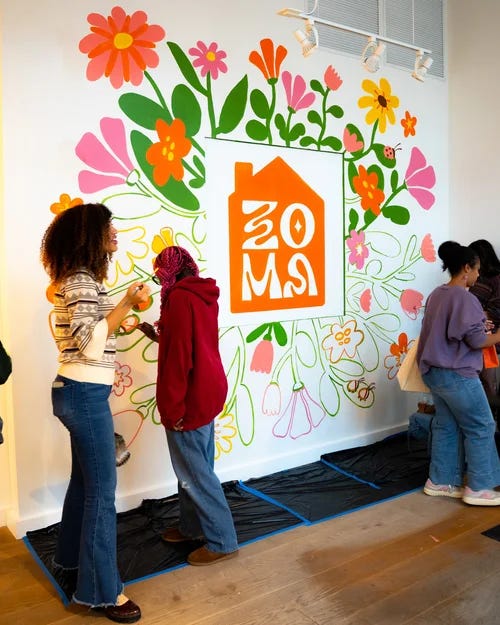
Photo of ZOMA House Community Mural, designed by Uzoma
Can you talk more about your community work? Specifically Zoma House.
I’m the founder of ZOMA House, a community art studio, event venue, and storefront in Uptown Minneapolis. And it is run by several other co-runners as well.
I was feeling this call to, like, take my practice more offline. Much of my creative practice, such as the animation and illustration work I do, has been digital and online. I wanted to bring my work into the physical world. I wanted to host events and bring the community together through art. I found a grant and wrote like 20 pages of an application, then we got the space. I have never owned a commercial studio space before. My studio was my bedroom. My work has never operated on this scale before, but something was just telling me, this is the thing I need to do. So I applied.
Zoma House is creating that space for BIPOC, especially Black artists, creators, and storytellers. We’re run by a team of 20-year-olds, so we bring a fresh perspective to what arts programming can look like.
I think ZOMA House is important because of the in-person connection that we are able to facilitate at our space. A person came to a screening that I hosted, and she said something that really stuck with me – “going to events like this makes me feel less lonely.” I feel like that speaks to what we are trying to build.
I went to this film collective event, and they gave us this reading material by Grace Lee Boggs. She talks about the importance of consistent gathering when it comes to community building. Since ZOMA House has been open, we’ve had at least one event every single week.
I want to create a space where people are known on a first-name basis, or people come and know that they’ll know someone. It’s so important that we create space where people are known and feel welcomed.
It’s such a special thing for an artist to get a physical space where they can make art and build community. It’s not something many ever get to do. Where did the name come from?
ZOMA, I should also clarify, is from my name because my full name is Uzoma.
And interestingly, House came from one of my colleagues at the high school where I work. When she learned my full name, Uzoma, was like, “Oh, it sounds like home.” And that just always stuck with me.
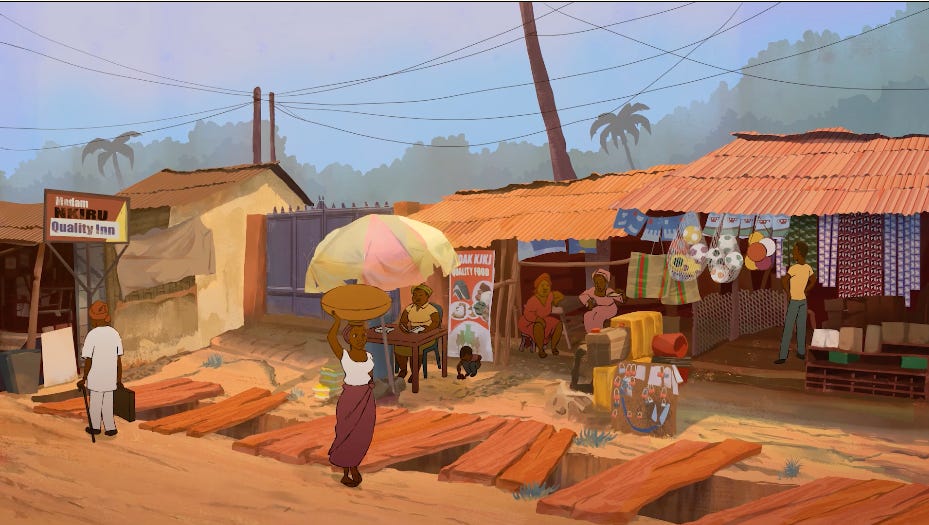
Screenshot from Mmanwu trailer
Where did you get the courage to start such ambitious projects? Everything I’ve seen from you has been large-scale, and very intricate in execution.
Now and then I do things and wonder where I got audacity and the courage?
I think it’s my parents. I think about their journey, immigrating to America. Leaving their entire world behind for the hope that things will be better for their children. To me, not only is that the ultimate sacrifice and display of love, but I also think it is the ultimate display of courage and faith.
The fact that I come from parents who did that means that I, too, can walk into unfamiliar rooms. I carry their audacity and courage with me.
I also feel connected to God, and the idea of a larger being, a larger power, and spiritual energy that pushes us towards good and that pushes us towards actualizing our truest selves.
Do you get scared?
I’ve come to learn that sometimes fear is a signal, and sometimes the things that scare us are calling us to them for a reason. I’ve done the scary thing so many times that, after a while, I just built the courage muscle. It makes it easier every time I do it again.
Declaring my major in art and film, pursuing a career as an artist, doing a crowdfunding campaign, and being responsible for a physical space were all scary things, but each time I pushed on regardless. I know I’ll find more things that scare me, but all of these experiences are reminders that I’ve done it before, and I can do it again.
Connect with the Artists
Uzoma Ngwu
🔗 Website
📸 Instagram
Amir Khadar
🔗 Website
📸 Instagram